
Addis Ababa, Ethiopia, East Africa
October 19, 2026 thru October 31, 2026


Why Ethiopia
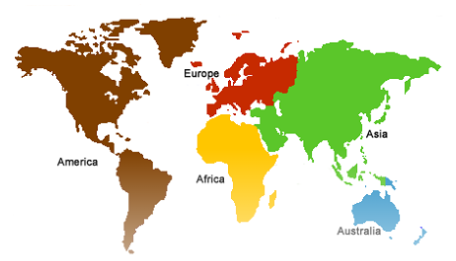
- Africa is the world’s second-largest and second-most populous continent, after Asia in both aspects. It covers 20% of Earth’s land area and 6% of its total surface area. With 1.4 billion people as of 2021, it accounts for about 18% of the world’s human population. There are 54 different countries in Africa and thousands of languages.
- Africa is considered by most paleo-anthropologists to be the oldest inhabited territory on Earth, with the Human species originating from the continent.
- The Sahara is the world’s largest desert and covers the northern section of the continent. Central Africa is mostly rainforest. East Africa is tropical. There are vast savannahs populated by elephants, lions, cheetahs, and countless other animals.
Fruit For Our Labors
| Our growth since our beginning in 2020 |
|---|
| …We have grown to over 124,060 followers in 191 countries. …We are training 4000 Pastors and Spiritual Leaders per year. …We are planting 3 churches per week. …We are donating 2,750 bibles per year. …We are leading 1,000,000 souls to Christ per year. |
| Expedition History for Africa |
|---|
| The main purpose of our 2023 Mission Expedition To East Africa between October 21 and November 2 of 2024 was to install Executive Pastors over the regions, and districts in Uganda. |
| The main purpose of our 2024 Mission Expedition To East Africa between October 21 and November 2 of 2024 was to install Executive Pastors over the regions, and districts in Kenya. |
| The main purpose of our 2025 Mission Expedition To West Africa between October 20 and November 1 of 2025 was to install Executive Pastors over the country of Nigeria and the 8 Regions and 36 States therein as we have in East Africa in Uganda and Kenya. However due to malicious Christian persecution the 2025 expedition was cancelled with only 2 days’ notice when the country cancelled the Visa. |
Focus On The Future
| The main purpose of our 2026 Mission Expedition To East Africa between October 19 and October 31 of 2026… |
|---|
| We will install the Ethiopia Executive Pastor Management Team with an Executive Pastor over the country of Ethiopia, each of the 12 Regions in Ethiopia, and each of the 770 Districts (Wards) in those Regions totaling a team of 783 Executive Pastors. |
| Just to manage Uganda, Kenya, Ethiopia and Nigeria this will require an Executive Pastor Team of 1020 representing a population of over 460,000,000. |
| We are now spreading our ministry across 14 Of the 53 African Countries including Burundi, Congo, Ethiopia, Ghana, Kenya, Liberia, Malawi, Mozambique, Nigeria, Rwanda, Tanzania, Uganda, Zambia, and Zimbabwe. |
Life In The Remote Villages Of Africa Hasn’t Significantly Changed In Hundreds Of Years


- An African village consists of a settlement of several families living together. These villagers have never experienced urbanization as they have no electricity, infrastructure, education, healthcare, and transportation services. The education gap is noticeable in most villages.
- Villagers grow their own crops and raise their own animals primarily for family consumption with little or nothing left for sale. Thus, in the rural areas of most East African countries, people engage in subsistence farming as a way of making ends meet.
Our Duty, Mission, And Passion:
The Great Commission

- As Christ’s followers, we have the Holy Spirit residing within us, which means we have His power to fulfill The Great Commission (Matthew 28:19-20). We can’t save anyone, but it’s our responsibility to tell people about the God who can. How will they believe unless they hear (Romans 10:14)? This is what we do at FaithByTheWord Ministries! Believers bear the responsibility of carrying the message of redemption to the lost. We are saved to save others.
- East Africa is the fastest growing region for Christians on this planet!
- More Christians live in East Africa than any other African region and by 2060 forty percent of all Christians in the world are expected to live there!
Our Primary Goal


- Our primary geographical focus are the small remote rural villages of East Africa surrounding the major cities in the countries of Uganda, Kenya, Tanzania, and Sudan.
- Our primary short term goal is reaching out to the remote villages to plant a church, including the construction and furnishing of the church, supplying all members with a Bible of their own, and staffing the church with a trained pastor who will also serve as a school teacher.
- Our primary long term goal includes safe water development projects (spring protection, bore holes), support for schools (establishment of a school and the education projects needed to sustain it), support for village medical needs (covid medication, typhoid medicine, mosquito nets).
There Is A Growing Missionary Presence Needed
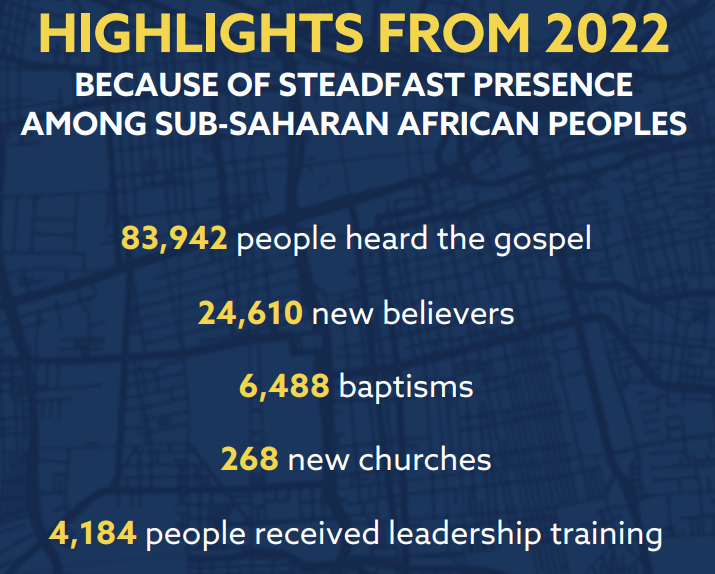
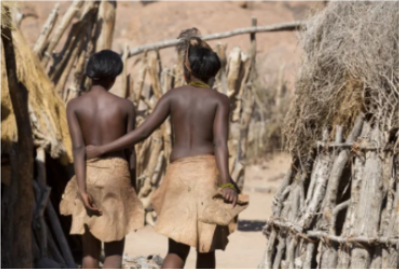
- 1 person dies every 5 seconds without knowing Jesus.
- There are still 1,657 unreached people groups who have never heard about Jesus.
There Is A Desperate Need To Get Bibles To The People
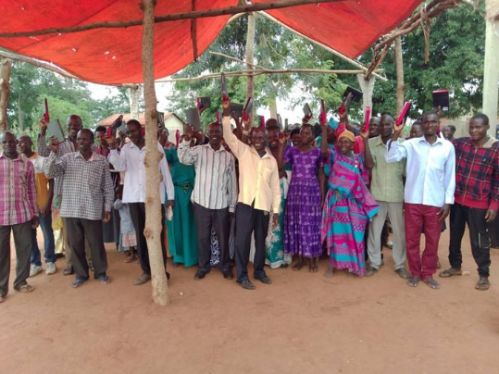

- There is only 1 Bible for every 300 Christians in East Africa primarily due to the cost of shipping. FaithByTheWord Ministries was quoted a price of $2,000 to deliver a case of 24 Bibles to a remote village.
- To overcome the prohibitive shipping costs we are blessed to partner with Project Bible Runners – a Godly blessed ministry that specializes in delivering The Word Of God around the world. Project Bible Runners is globally focused on gathering and running Bibles to every nation, tribe and person until every faithful follower of Christ Jesus holds in their hands The Word Of God.
- The common language of all 2,500 East African villages is English. Our mission is to take The Word to all 2,500 rural villages in East Africa and train and ordain a pastor for each village within 5 years. Experience shows that for every Bible sent to East Africa 10 lost souls will accept Christ as their Lord & Savior in the first 12 months and the number only goes up each year thereafter.
The Most Precious Possession They Have Is Their Bible

- When the people hold their Bibles they hold them like they’re holding baby Jesus Himself! When they came out to show us the Bibles they had tears of joy!
- Many have waited their whole lives to have a Bible of their own.
- Many churches still only have a single Bible which they divide up into 20 or 30 sections and swap around every few weeks.
There Is A Desperate Need To Train Pastors & Sunday School Teachers


- FaithByTheWord Ministries, in its efforts to to share The Gospel throughout the world, has created the Theological Bible Studies Institute. At FaithByTheWord we have been focused on training pastors in the rural villages of East Africa and within the first 6 months of 2025 we will be moving into India. This ministry has been so well received that we can hardly keep up with the requests for more and more classes and seminars. Please pray for this ministry and prayerfully consider a small gift to share The Word around the world.
- With the completion of the above class on Sound Doctrine & Ministry Skills on December 28, 2023, The Theological Bible Studies Institute of FaithByTheWord Ministries has graduated over 2,000 students in Uganda during 2023 and is on track to graduate over 4,000 for 2024.
- The main purpose of the institute is to train pastors who will be able to train other pastors who will be able to train others. If we train 10 who train 10 who train 10 who train 10 we will have trained 10,000 pastors – enough to plant in all 2,500 remote villages of East Africa and all 10,000 remotes villages of India!!! Our plan is to have a trained pastor in all 2500 remote villages in East Africa by 2026.
- Our mission also includes making sure everyone has access to The Word Of God anytime and anywhere they desire regardless of whether they can read or not. To meet this objective we partner with Project Bible Runners and Faith Comes By Hearing – two Godly blessed ministries that specialize in delivering The Word Of God in unique and powerful ways.
There Is A Desperate Need For Simple Church Structures
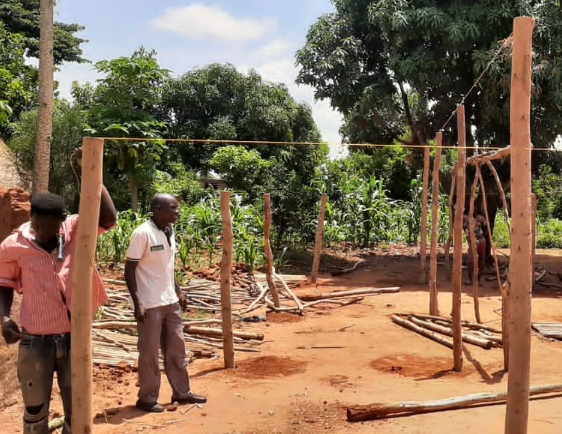


- The villagers in these remote rural areas feel they dishonor God by not providing a church from which to worship Him.
- The goal of every village is to build a church albeit a very basic structure of poles and tin sheets.
- Without aid from outside ministries, such as FaithByTheWord, to buy materials, it can take years for a village to save money a little at a time and buy materials as they go even though it may only be a few poles or a sheet of tin.
- However, when the first pole goes in the ground they have established a church and will worship there every Sunday even though they may be drenched in the rain. They don’t have umbrellas and overcoats but they are honoring God!
There Is A Desperate Need To Feed The Orphans


- In the entire continent of Africa, there are an estimated 52 million orphans. Statistics for orphans show most have lost their parents through diseases such as typhus, yellow fever, malaria, ebola, and diarrhea. 32 percent of orphans in Africa have had parents die from AIDS.
- With approximately 140 million orphans in the world, Africa’s 52 million make up more than 30 percent of the entire world orphan population.
- Close to a Quarter of all African Youths are Orphaned. In East Africa, around 20 percent of the population under 18 is considered orphaned.
- Many orphans have no support and are forced to fend for themselves and find that extended family members are often unable to provide any support at all.
There Is A Desperate Need To Teach The Children


- There are approximately 9 million children of primary school age unable to attend schools in Africa due to various reasons.
- For every two children who attend school in Africa, one will drop out before graduating.
- Approximately 8 of the 10 countries with the lowest primary enrollment rates are in East Africa. Only 7 in 10 children who live in rural areas will ever set foot in a school.
- Parents often can’t afford the cost of education, including books, uniforms, and tuition fees for their children to attend schools in Africa. In response, 15 countries have abolished school fees since 2000, enabling more children to attend primary school.
- Many private schools cost over $9,000 per year.
There Is A Desperate Need For Medical Care & Clean Water
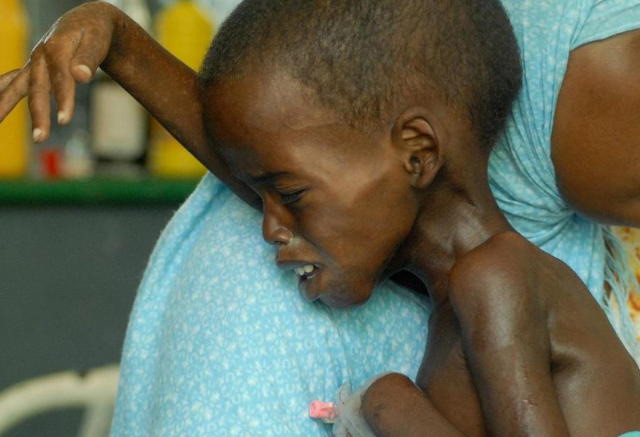
- For the traditional African, health is not just about the proper functioning of bodily organs. Good health for the African consists of mental, physical, spiritual, and emotional stability for oneself, family members, and community.
- Less than half of Africa’s citizens (52%) – some 615 million people – have access to the healthcare they need, the continent’s quality of health services is generally poor and the family planning needs of half the continent’s women and girls are unmet.
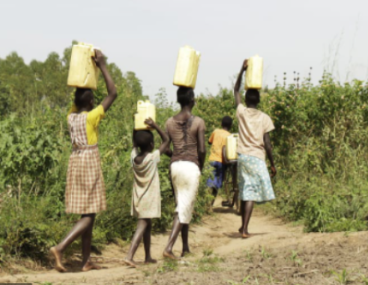
- In Eastern Africa, deep water wells of at least 1,000 feet are needed to provide parasite free water.
- East Africans walk 3 miles each way every day to get clean water.
- Diarrhea is a major cause of death due to the parasites in the water.
- In East Africa, 75% of the population is under age 25 due to lack of disease control.